Army-2021: Russia expands its Arctic arsenal
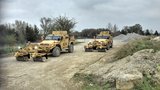
The DGT-S can transport 16 casualties and crew across 450km. (Photo: via author)
New medevac vehicle and tracked APC highlight commitment to protected mobility in the High North.


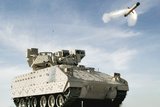
The DGT-S medical evacuation vehicle and a BT-3F tracked APC adapted for operation in the Arctic environment were displayed at a special ‘Arctic’ exhibition during the Army-2021 event.
The amphibious DGT-S is based on the GAZ-2244-20 tracked articulated transporter and can carry five passengers in the front car and another 11 in the rear medical vehicle.
The DGT-S is powered by a liquid-cooled 240hp turbodiesel allowing it to reach a maximum speed of 50km/h on-road and 3.8km/h afloat. The vehicle has an operational radius of up to 450km on the road, a kerb weight of 11,000kg and a gross weight of
Our news & analysis is now part of Defence Insight®
A Basic-level or higher Defence Insight subscription is now required to view this content.


More from Land Warfare
-
![AUSA 2026: companies adapt munitions and missiles for greater effect at lower costs]()
AUSA 2026: companies adapt munitions and missiles for greater effect at lower costs
Rather than developing entirely new weapons, defence companies are looking to build on existing weapons and systems to deliver greater capability, control costs and accelerate fielding.
-
![With changing patterns in Middle Eastern procurement, is Europe missing out?]()
With changing patterns in Middle Eastern procurement, is Europe missing out?
Traditional suppliers are struggling to meet the Middle East’s armoured vehicle modernisation needs, creating opportunities for South Korean manufacturers and regional defence industries.
-
![AUSA 2026: CUAS market expands as suppliers target new threats and operational requirements]()
AUSA 2026: CUAS market expands as suppliers target new threats and operational requirements
New developments from MARSS, MyDefence, Mountain Horse Solutions and Rafael suggest that future counter-drone protection will increasingly depend on combining advanced detection, rapid interception and integrated defensive networks.